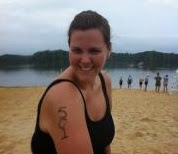
I wasn't comfortable running until I lost a considerable amount of weight at the recommendation of my doctor. At 330 and after a back injury, she told me not to run until I lost some weight. She didn't give me a number so I had to figure that one out on my own. For me, I conditioned myself by training to walk and completing a half-marathon. At that time, I knew my body was in better shape then it had been 6 months earlier (and I had lost 50 lbs), so I started by running a few 1 minute intervals during my walks on the treadmill. Here are some things that got me from walking to running a 5K:
- Get fitted for good running shoes. I KNOW going to a running store to buy a pair of shoes is EXPENSIVE. But it is worth every single penny of your initial investment to have someone who knows what they are doing look at the way you walk/run and decide which shoes would work best for you. Once you purchase your first pair from the running store and you are sure they are what work for you, you can typically find the same or updated model/style of your shoe online for less. I've had 4 pairs of the SAME shoe. (But don't go to the running store, waste their time getting fitted and NOT buy from them the first time. What I'm saying is you can REBUY online for cheaper.)
- Buy wicking socks. These will help prevent blisters and make your feet happy. Who cares if they are $10 a pair? Two words: WORTH IT.
- Find an interval program. I used 5Kin100days and I high recommend this program and the instruction of Brad Gansberg. There are plenty of other programs out there (like Couch to 5K). Find what one works for you.
- Warm up/Cool down each time, every time. Walk at a moderate pace for 5 minutes before/after you each workout.
- Stretch after each workout. Pay special attention to any "trouble" spots. For me, this is making sure I do plenty of low back and hip opening stretches.
- Rest. When you are learning to run, build a day of rest in between each run workout so you don't run two days in a row. Do low impact activities on these days if you wish - beginner's yoga, swimming/pool workouts and strength training are all great workouts to keep your body strong, flexible and stretched.
- Start on a treadmill. I know the treadmill gets a bad rap, but it's great for learning to run because frankly it's easier to run on a moving object, plus it absorbs some of the shock running puts on your body (knees, back). I did my runs primarily on the treadmill for the first several months. Typically, I would do 2x a week at the gym on the treadmill and 1x a week outside.
- Listen to your body. Don't worry about your speed. Just worry about covering the distance or completing the time of the intervals as prescribed by your learn to run program. If you aren't able to complete a run interval, slow down. I've found for me running between 4.0-4.3 mph, which puts me around 14:30-15:00 per mile, works.
- Treat injuries. In the same vain of listening to your body, make sure you are in tune with any pain you are feeling in your legs, knees, back, etc. Be familiar with the R.I.C.E technique - Rest. Ice. Compression. Elevation. Knock on wood I haven't had any problems this summer. Last summer? Well that was a different story...
Again, these are things that I found worked for me. Please consult a doctor before beginning a workout regimen or self-treating any injuries.
Okay runners - your turn - what are your best tips for beginning a running regimen?